

Direct cash Payouts
Direct cash conversions deposited for your attention and time spent reading. Your focus has real monetary value.
PrincoBudget News is live with breaking news, global reporting, and stories that matter — curated for clarity, not clickbait. Our world's first paid-to-read feature is launching soon: join the waitlist to earn for genuine attention when it goes live.
Three core pillars powering the next generation of news — from breaking headlines to viral stories that reward real attention.
Direct cash conversions deposited for your attention and time spent reading. Your focus has real monetary value.

A dynamic tracking system that measures and rewards your true article comprehension and deep reading focus.

Turn your daily news consumption into global impact by funding verified nonprofit initiatives.
Three simple steps from signup to earning.
Reserve your spot early and secure your place in the referral queue before launch.
Our AI engine tracks meaningful interaction depth — not vanity clicks or sensational headlines.
Top readers receive direct cash payouts for the attention and time they invest in quality news.
Everything you need to know about PrincoBudget News.
Join the waitlist today and be first in line when we launch.
Appearance
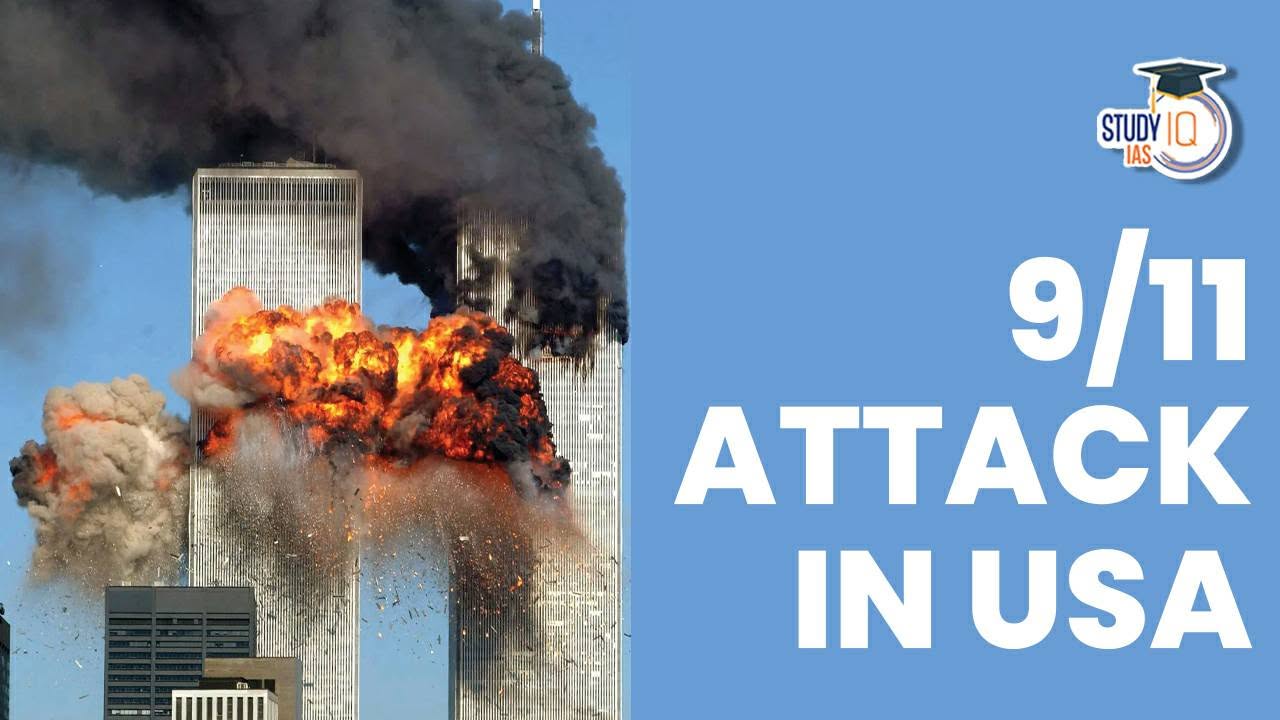
A Note on the 25th Anniversary: Twenty-five years ago, on a clear September morning, the United States suffered the deadliest terrorist attack in its history. Nearly three thousand people were murdered in New York, at the Pentagon, and in a Pennsylvania field. The wounds remain. Families still grieve. First responders and survivors continue to face the long-term effects of that day. As the nation marks a quarter-century since September 11, 2001, the facts of what happened must be remembered without embellishment or distortion. On the morning of Tuesday, September 11, 2001, 19 men affiliated with the Islamist terrorist organization al-Qaeda hijacked four commercial airliners in a coordinated suicide attack against the United States. The planes were turned into weapons. Two struck the Twin Towers of the World Trade Center in New York City. One struck the Pentagon in Arlington, Virginia, and the fourth crashed into a field near Shanksville, Pennsylvania, after passengers and crew fought back. Nearly 3,000 people were killed. The attacks remain the deadliest terrorist incident in history and the deadliest foreign attack on American soil.The official investigation by the National Commission on Terrorist Attacks Upon the United States (the 9/11 Commission) established that the plot was directed by al-Qaeda leader Osama bin Laden and operationally planned primarily by Khalid Sheikh Mohammed. Bin Laden later claimed responsibility in a 2004 video statement. The 19 hijackers were trained by al-Qaeda; 15 were Saudi nationals, two were from the United Arab Emirates, one was Egyptian (Mohamed Atta, the operational leader of the Hamburg cell that included several of the pilots), and one was Lebanese. Background and Planning: Al-Qaeda, founded by bin Laden in the late 1980s, had already attacked American targets, including the 1998 U.S. embassy bombings in Kenya and Tanzania and the 2000 attack on the USS Cole. Bin Laden had issued public calls for violence against Americans. The 9/11 plot involved selecting long-haul West Coast flights that would be fully fueled. The hijackers trained as pilots in the United States and entered the country legally on visas. Intelligence agencies had received warnings of impending attacks in the summer of 2001 (“the system was blinking red”), but information was not adequately shared or acted upon across agencies. The Commission later identified failures of imagination, policy, capabilities, and management. Airport security at the time allowed small knives (box cutters were the primary weapons used). Several hijackers were selected for additional screening but were allowed to board. Timeline of the Attacks (All Times Eastern Daylight Time) The four aircraft were: American Airlines Flight 11 (Boeing 767, Boston to Los Angeles): 11 crew, 76 passengers + 5 hijackers. Departed 7:59 a.m. United Airlines Flight 175 (Boeing 767, Boston to Los Angeles): 9 crew, 51 passengers + 5 hijackers. Departed 8:14 a.m. American Airlines Flight 77 (Boeing 757, Washington Dulles to Los Angeles): 6 crew, 53 passengers + 5 hijackers. Departed 8:20 a.m. United Airlines Flight 93 (Boeing 757, Newark to San Francisco): 7 crew, 33 passengers + 4 hijackers. Departed 8:42 a.m. (delayed). Early morning movements: Mohamed Atta and Abdul Aziz al-Omari cleared security in Portland, Maine, around 5:45 a.m. and flew to Boston to board Flight 11. Other hijackers boarded at Boston Logan, Dulles, and Newark. Hijackings Begin: Around 8:14 a.m., Flight 11 was hijacked. Flight attendants Betty Ong and Madeline “Amy” Sweeney used airphones to report the takeover. Ong described the situation: "The cockpit was inaccessible, passengers and crew had been stabbed, and the hijackers were in control." Controllers lost normal contact. At approximately 8:24 a.m, Atta (piloting) mistakenly transmitted over the air traffic control frequency instead of the cabin PA: “We have some planes. Just stay quiet, and you’ll be okay. We are returning to the airport.” A later transmission from the Hijackers, and their last one before the impact, reads: “Nobody move. Everything will be OK. If you try to make any moves, you’ll endanger yourself and the airplane. Just stay quiet.” Flight 175 was hijacked around 8:42–8:46 a.m. Controllers and other pilots heard suspicious transmissions. Flight 77 was hijacked after 8:51 a.m. and its transponder was turned off. Flight 93 was hijacked around 9:28 a.m. Its pilot and first officer made “Mayday” calls and were heard struggling. Impact times: 8:46:40 a.m. — Flight 11 struck the North Tower (1 World Trade Center) between floors 93 and 99 at roughly 465 mph. All aboard died instantly. Stairwells and elevators were severed; hundreds were trapped above the impact zone. 9:03:11 a.m. — Flight 175 struck the South Tower (2 World Trade Center) between floors 77 and 85 at about 590 mph. The impact was broadcast live. All aboard died; many more were trapped. 9:37 a.m. — Flight 77 struck the west side of the Pentagon, penetrating multiple rings of the building. All aboard and 125 people in the building died. 10:03:11 a.m. — Flight 93 crashed in a field in Stonycreek Township, Somerset County, Pennsylvania, after passengers and crew stormed the cockpit. The 9/11 Commission concluded the intended target was likely the U.S. Capitol or the White House. President George W. Bush was informed while reading to school children in Florida. Chief of Staff Andrew Card whispered to him at about 9:05 a.m, “A second plane hit the second tower. America is under attack.” Collapses: The South Tower collapsed at 9:59 a.m. after burning for 56 minutes. The North Tower collapsed at 10:28 a.m. Debris and fires destroyed or damaged surrounding buildings. Part of the Pentagon collapsed later that morning. Flight 93 cockpit voice recorder and passenger revolt: The recorder captured the final ~30 minutes. Hijacker-pilot Ziad Jarrah announced to passengers (transmitted to controllers): “Ladies and gentlemen: Here the captain. Please sit down, keep remaining seating. We have a bomb on board. So sit.” Later, as the issue intesifies on board, and as the Hijackers diverts to crash potientally into the White House Building not too far away, their last communication to the passengers reads: “We have a bomb aboard, and we are going back to the airport, and we have our demands. So please remain quiet.” Passengers and crew, learning via phone calls of the other attacks, voted to act. Todd Beamer’s final words to a ground operator included: “Are you guys ready? Okay. Let’s roll.” Sounds of struggle, crashing, and passengers forcing their way toward the cockpit were audible. Hijackers shouted in Arabic. One said “Pull it down!” as the plane inverted and crashed. All 44 people aboard died. Airspace was shut down. Military fighters were scrambled, but none intercepted the hijacked planes before impact. Casualties: Official count: 2,977 victims (excluding the 19 hijackers). Breakdown: World Trade Center and surrounding area: 2,753 (including 343 New York City firefighters, 23 NYPD officers, 37 Port Authority officers). Pentagon: 184 (125 in the building + 59 aboard Flight 77). Flight 93: 40 passengers and crew. All 246 people aboard the four aircraft (excluding hijackers) died. Victims included citizens of more than 70 countries. The youngest was 2 years old; the oldest was in their 80s. Thousands more were injured. Long-term health effects from toxic dust at Ground Zero have caused additional deaths and illnesses among responders and survivors. Immediate Aftermath and Investigation Rescue and recovery at the World Trade Center site (Ground Zero) continued for months. The FBI’s investigation rapidly linked the hijackers to al-Qaeda. Bin Laden was identified as the primary suspect within hours. The 9/11 Commission (bipartisan, created in 2002) reviewed millions of pages of documents and interviewed more than 1,200 people. Its July 2004 report provided the definitive public account, detailed the plot, and criticized intelligence and aviation security failures. It found no evidence that the Saudi government as an institution funded the specific attacks, though 15 hijackers were Saudi. Key recommendations included better intelligence coordination (leading to the Director of National Intelligence and National Counterterrorism Center), improved aviation security, and a global strategy against Islamist terrorism. Longer-Term Consequences Military response: On October 7, 2001, the United States and coalition partners launched Operation Enduring Freedom in Afghanistan to dismantle al-Qaeda and remove the Taliban regime that had sheltered it. The Taliban fell quickly, but the war continued for nearly 20 years until the U.S. withdrawal in 2021, after which the Taliban regained control. In 2003 the United States invaded Iraq, citing (among other reasons) alleged links to terrorism and weapons of mass destruction that were not substantiated as claimed. The war and occupation lasted years and contributed to regional instability and the rise of groups such as ISIS. Bin Laden was killed by U.S. Navy SEALs in a raid on his compound in Abbottabad, Pakistan, on May 2, 2011. Domestic security and law: The USA PATRIOT Act (October 2001) expanded surveillance and investigative powers. The Department of Homeland Security was created. The Transportation Security Administration (TSA) federalized airport screening. Cockpit doors were hardened, no-fly lists expanded, and passenger screening intensified. Continuity-of-government measures were activated for the first time on 9/11. Human and economic cost: Direct and long-term costs of the post-9/11 wars have been estimated in the trillions of dollars. Thousands of American service members were killed or wounded; far higher numbers of Afghan, Iraqi, and other civilians died. The attacks unified the country temporarily, produced lasting changes in security culture, and reshaped American foreign policy for a generation. The 9/11 Commission Report remains the primary authoritative source for the sequence of events, the hijackers’ actions, intelligence failures, and the emergency response. Official timelines, air traffic control recordings, flight data recorders, cockpit voice recorders (especially Flight 93), passenger phone calls, and survivor and responder accounts corroborate the public record. The attacks demonstrated both the vulnerability of open societies and the capacity for ordinary people—flight attendants reporting hijackings, passengers on Flight 93 fighting back, first responders rushing into collapsing buildings—to confront extreme violence with courage.
USA Note on the 25th Anniversary: Twenty-five years ago, on a clear September morning, the United States suffered the deadliest terrorist attack in its history. Nearly three thousand people were murdered in New York, at the Pentagon, and in a Pennsylvania field. The wounds remain. Families still grieve. First responders and survivors continue to face the long-term effects of that day. As the nation marks a quarter-century since September 11, 2001, the facts of what happened must be remembered without embellishment or distortion. On the morning of Tuesday, September 11, 2001, 19 men affiliated with the Islamist terrorist organization al-Qaeda hijacked four commercial airliners in a coordinated suicide attack against the United States. The planes were turned into weapons. Two struck the Twin Towers of the World Trade Center in New York City. One struck the Pentagon in Arlington, Virginia, and the fourth crashed into a field near Shanksville, Pennsylvania, after passengers and crew fought back. Nearly 3,000 people were killed. The attacks remain the deadliest terrorist incident in history and the deadliest foreign attack on American soil.The official investigation by the National Commission on Terrorist Attacks Upon the United States (the 9/11 Commission) established that the plot was directed by al-Qaeda leader Osama bin Laden and operationally planned primarily by Khalid Sheikh Mohammed. Bin Laden later claimed responsibility in a 2004 video statement. The 19 hijackers were trained by al-Qaeda; 15 were Saudi nationals, two were from the United Arab Emirates, one was Egyptian (Mohamed Atta, the operational leader of the Hamburg cell that included several of the pilots), and one was Lebanese. Background and Planning: Al-Qaeda, founded by bin Laden in the late 1980s, had already attacked American targets, including the 1998 U.S. embassy bombings in Kenya and Tanzania and the 2000 attack on the USS Cole. Bin Laden had issued public calls for violence against Americans. The 9/11 plot involved selecting long-haul West Coast flights that would be fully fueled. The hijackers trained as pilots in the United States and entered the country legally on visas. Intelligence agencies had received warnings of impending attacks in the summer of 2001 (“the system was blinking red”), but information was not adequately shared or acted upon across agencies. The Commission later identified failures of imagination, policy, capabilities, and management. Airport security at the time allowed small knives (box cutters were the primary weapons used). Several hijackers were selected for additional screening but were allowed to board. Timeline of the Attacks (All Times Eastern Daylight Time) The four aircraft were: American Airlines Flight 11 (Boeing 767, Boston to Los Angeles): 11 crew, 76 passengers + 5 hijackers. Departed 7:59 a.m. United Airlines Flight 175 (Boeing 767, Boston to Los Angeles): 9 crew, 51 passengers + 5 hijackers. Departed 8:14 a.m. American Airlines Flight 77 (Boeing 757, Washington Dulles to Los Angeles): 6 crew, 53 passengers + 5 hijackers. Departed 8:20 a.m. United Airlines Flight 93 (Boeing 757, Newark to San Francisco): 7 crew, 33 passengers + 4 hijackers. Departed 8:42 a.m. (delayed). Early morning movements: Mohamed Atta and Abdul Aziz al-Omari cleared security in Portland, Maine, around 5:45 a.m. and flew to Boston to board Flight 11. Other hijackers boarded at Boston Logan, Dulles, and Newark. Hijackings Begin: Around 8:14 a.m., Flight 11 was hijacked. Flight attendants Betty Ong and Madeline “Amy” Sweeney used airphones to report the takeover. Ong described the situation: "The cockpit was inaccessible, passengers and crew had been stabbed, and the hijackers were in control." Controllers lost normal contact. At approximately 8:24 a.m, Atta (piloting) mistakenly transmitted over the air traffic control frequency instead of the cabin PA: “We have some planes. Just stay quiet, and you’ll be okay. We are returning to the airport.” A later transmission from the Hijackers, and their last one before the impact, reads: “Nobody move. Everything will be OK. If you try to make any moves, you’ll endanger yourself and the airplane. Just stay quiet.” Flight 175 was hijacked around 8:42–8:46 a.m. Controllers and other pilots heard suspicious transmissions. Flight 77 was hijacked after 8:51 a.m. and its transponder was turned off. Flight 93 was hijacked around 9:28 a.m. Its pilot and first officer made “Mayday” calls and were heard struggling. Impact times: 8:46:40 a.m. — Flight 11 struck the North Tower (1 World Trade Center) between floors 93 and 99 at roughly 465 mph. All aboard died instantly. Stairwells and elevators were severed; hundreds were trapped above the impact zone. 9:03:11 a.m. — Flight 175 struck the South Tower (2 World Trade Center) between floors 77 and 85 at about 590 mph. The impact was broadcast live. All aboard died; many more were trapped. 9:37 a.m. — Flight 77 struck the west side of the Pentagon, penetrating multiple rings of the building. All aboard and 125 people in the building died. 10:03:11 a.m. — Flight 93 crashed in a field in Stonycreek Township, Somerset County, Pennsylvania, after passengers and crew stormed the cockpit. The 9/11 Commission concluded the intended target was likely the U.S. Capitol or the White House. President George W. Bush was informed while reading to school children in Florida. Chief of Staff Andrew Card whispered to him at about 9:05 a.m, “A second plane hit the second tower. America is under attack.” Collapses: The South Tower collapsed at 9:59 a.m. after burning for 56 minutes. The North Tower collapsed at 10:28 a.m. Debris and fires destroyed or damaged surrounding buildings. Part of the Pentagon collapsed later that morning. Flight 93 cockpit voice recorder and passenger revolt: The recorder captured the final ~30 minutes. Hijacker-pilot Ziad Jarrah announced to passengers (transmitted to controllers): “Ladies and gentlemen: Here the captain. Please sit down, keep remaining seating. We have a bomb on board. So sit.” Later, as the issue intesifies on board, and as the Hijackers diverts to crash potientally into the White House Building not too far away, their last communication to the passengers reads: “We have a bomb aboard, and we are going back to the airport, and we have our demands. So please remain quiet.” Passengers and crew, learning via phone calls of the other attacks, voted to act. Todd Beamer’s final words to a ground operator included: “Are you guys ready? Okay. Let’s roll.” Sounds of struggle, crashing, and passengers forcing their way toward the cockpit were audible. Hijackers shouted in Arabic. One said “Pull it down!” as the plane inverted and crashed. All 44 people aboard died. Airspace was shut down. Military fighters were scrambled, but none intercepted the hijacked planes before impact. Casualties: Official count: 2,977 victims (excluding the 19 hijackers). Breakdown: World Trade Center and surrounding area: 2,753 (including 343 New York City firefighters, 23 NYPD officers, 37 Port Authority officers). Pentagon: 184 (125 in the building + 59 aboard Flight 77). Flight 93: 40 passengers and crew. All 246 people aboard the four aircraft (excluding hijackers) died. Victims included citizens of more than 70 countries. The youngest was 2 years old; the oldest was in their 80s. Thousands more were injured. Long-term health effects from toxic dust at Ground Zero have caused additional deaths and illnesses among responders and survivors. Immediate Aftermath and Investigation Rescue and recovery at the World Trade Center site (Ground Zero) continued for months. The FBI’s investigation rapidly linked the hijackers to al-Qaeda. Bin Laden was identified as the primary suspect within hours. The 9/11 Commission (bipartisan, created in 2002) reviewed millions of pages of documents and interviewed more than 1,200 people. Its July 2004 report provided the definitive public account, detailed the plot, and criticized intelligence and aviation security failures. It found no evidence that the Saudi government as an institution funded the specific attacks, though 15 hijackers were Saudi. Key recommendations included better intelligence coordination (leading to the Director of National Intelligence and National Counterterrorism Center), improved aviation security, and a global strategy against Islamist terrorism. Longer-Term Consequences Military response: On October 7, 2001, the United States and coalition partners launched Operation Enduring Freedom in Afghanistan to dismantle al-Qaeda and remove the Taliban regime that had sheltered it. The Taliban fell quickly, but the war continued for nearly 20 years until the U.S. withdrawal in 2021, after which the Taliban regained control. In 2003 the United States invaded Iraq, citing (among other reasons) alleged links to terrorism and weapons of mass destruction that were not substantiated as claimed. The war and occupation lasted years and contributed to regional instability and the rise of groups such as ISIS. Bin Laden was killed by U.S. Navy SEALs in a raid on his compound in Abbottabad, Pakistan, on May 2, 2011. Domestic security and law: The USA PATRIOT Act (October 2001) expanded surveillance and investigative powers. The Department of Homeland Security was created. The Transportation Security Administration (TSA) federalized airport screening. Cockpit doors were hardened, no-fly lists expanded, and passenger screening intensified. Continuity-of-government measures were activated for the first time on 9/11. Human and economic cost: Direct and long-term costs of the post-9/11 wars have been estimated in the trillions of dollars. Thousands of American service members were killed or wounded; far higher numbers of Afghan, Iraqi, and other civilians died. The attacks unified the country temporarily, produced lasting changes in security culture, and reshaped American foreign policy for a generation. The 9/11 Commission Report remains the primary authoritative source for the sequence of events, the hijackers’ actions, intelligence failures, and the emergency response. Official timelines, air traffic control recordings, flight data recorders, cockpit voice recorders (especially Flight 93), passenger phone calls, and survivor and responder accounts corroborate the public record. The attacks demonstrated both the vulnerability of open societies and the capacity for ordinary people—flight attendants reporting hijackings, passengers on Flight 93 fighting back, first responders rushing into collapsing buildings—to confront extreme violence with courage.
SpaceXAI, the artificial intelligence division of SpaceX, on Tuesday introduced Grok Bot in early beta, describing the product as a team of always-on AI agents that can sign into users’ existing tools and apps, complete multi-step tasks independently, and return finished work. “Bots are AI teammates that do real work for you. They sign in to your tools, use them just like you do, and come back with finished work,” the company account @SpaceXAI posted on X alongside a demonstration video. Users can assign tasks via messaging on desktop or iOS, step away, and check in later; the agents operate on their own cloud-based computers and only ping for approvals when needed. SpaceXAI said Grok Bot began as an internal prototype that “took off across the company.” Teams used it for sales outbound, marketing campaigns, office operations, bug fixes, CRM updates, invoice processing, and other workflows. Multiple bots can run in parallel, share context, message one another, and coordinate in group chats, with one bot able to manage others. The product is available now in early beta to SuperGrok Heavy, Cursor Ultra, and Cursor Teams Premium subscribers. Enterprise users can join a waitlist. Elon Musk said the company will widen access after addressing basic issues in the early beta and releasing Grok 4.6 later this week. Grok Bot arrives as SpaceXAI pushes deeper into agentic AI systems that perform end-to-end work rather than just generating responses. The company, formed after SpaceX acquired xAI earlier in 2026, has been expanding its AI offerings, including the recent Grok 4.5 model and its pending $60 billion acquisition of the coding startup Cursor. Officials have positioned the new agents against competing tools from Microsoft and Google. In a company blog post, SpaceXAI noted that bots can work across apps and websites even without clean APIs, learning user preferences over time and handling jobs such as negotiating with vendors in a user’s voice, managing online store support, or keeping systems updated overnight. The launch coincides with broader company efforts to scale AI revenue and infrastructure. Early users and observers have begun testing specialized bots for roles ranging from content creation and research to operations and engineering support. SpaceXAI emphasized that the system is still in early beta and continues to be refined.
Advertisement
The Walt Disney Company on Wednesday reported fiscal third-quarter revenue of $25.2 billion, a 7% increase from $23.7 billion a year earlier, as the box-office success of Pixar’s Toy Story 5 and stronger consumer-product sales helped lift results across key businesses. Adjusted earnings per share rose to $2.06 from $1.61 in the prior-year period, beating Wall Street expectations of roughly $1.85 to $1.86. Total segment operating income climbed 21% to $5.6 billion. Net income attributable to Disney was $2.6 billion, or $1.51 per share, down from $5.3 billion a year earlier, reflecting the absence of one-time tax benefits recorded in the year-ago quarter. The quarter ended June 27, 2026. Disney said the results modestly exceeded its prior guidance for total segment operating income. Toy Story 5, released in theaters on June 19, surpassed $1 billion in global box-office receipts and ranked among the year’s top-grossing films. The animated sequel, directed by Andrew Stanton, contributed to higher content sales in the entertainment segment and fueled demand for related merchandise. Consumer-products revenue, included in the Experiences segment, rose on the strength of Toy Story merchandise. Disney noted that merchandise licensing and retail sales increased 8% in the quarter. The Experiences segment overall posted revenue of $9.97 billion, up 10%, with operating income of about $3.0 billion. Domestic theme-park attendance rose 3% and per-guest spending increased 4%. Entertainment segment revenue grew 6% to $11.3 billion, while operating income surged 64% to $1.68 billion. Streaming revenue from Disney+ and Hulu climbed 11% to $5.53 billion, with combined streaming operating income more than doubling to $712 million from $329 million a year earlier, driven by subscriber growth, higher pricing and advertising gains. Sports segment revenue rose 4% to $4.5 billion. In a letter to shareholders, CEO Josh D’Amaro said the results “reinforce our confidence that we are uniquely well positioned,” pointing to decades of investment in intellectual property that continue to drive financial performance. Disney reiterated its full-year outlook for adjusted EPS growth of approximately 12% excluding the impact of a 53rd week in the fiscal year, or about 16% including it. The company also raised its fiscal 2026 share-repurchase target to at least $9 billion. Disney shares rose in premarket trading following the release.
 US
USNEW DELHI — Meta Platforms’ Chief Global Affairs Officer Joel Kaplan on Wednesday apologised to India’s information technology minister for briefly restricting a post by Prime Minister Narendra Modi last month, calling it an operational error. “I apologised to the minister on behalf of Meta for the error restricting PM Modi’s post,” Kaplan said in a statement after meeting Union Electronics and Information Technology Minister Ashwini Vaishnaw in New Delhi. A team of Meta executives led by Kaplan, who travelled from the United States for the talks, also met IT Secretary S. Krishnan earlier in the day. The meetings came after the Ministry of Electronics and Information Technology summoned Meta’s senior leadership over the incident. On July 23, Modi posted a selfie-style video on Instagram that was later shared on Facebook. In it, he addressed students and young people amid nationwide protests over examination paper leaks, promising stringent action and noting that legislation would be introduced to tackle the issue. The Facebook version of the post was temporarily restricted for several hours before being restored. Meta has said the content was removed “in error.” Company officials attributed the restriction to a glitch in its AI-powered automated content filters. Some accounts of the meeting indicated the post was inadvertently flagged as a potential deepfake amid a sudden surge in views. During the restriction, some users reportedly saw a notice stating the media was unavailable in the region due to a legal request. The Indian government initially found Meta’s explanation inadequate and said the matter was not settled. IT Secretary S. Krishnan had earlier noted that while Meta apologised and admitted a mistake, officials sought more details on why its systems failed and how the company planned to prevent recurrence. Meta has since indicated it has put in place new protocols for accounts of prominent persons, including additional senior-level oversight. The episode occurred against the backdrop of large youth-led protests organised under the banner of the Cockroach Janta Party (CJP). The movement, which began online and spilled onto the streets, focused on repeated examination paper leaks — including those affecting the National Eligibility cum Entrance Test (NEET) — and related grievances that contributed to the resignation of Education Minister Dharmendra Pradhan. A Parliamentary Standing Committee on Information Technology also took up the matter. The panel viewed the temporary removal of Modi’s video “very seriously” and called for an apology from Meta CEO Mark Zuckerberg within three days, warning that safe-harbour protections under Indian law could be reviewed if the demand was not met. Government sources said the discussions with Meta executives went beyond the Modi post and covered broader content-moderation concerns, including child sexual abuse material (CSAM), deepfakes, and the paid promotion of certain types of content. Sources indicated that Meta acknowledged lapses and expressed regret. Local media reported that Zuckerberg conveyed apologies on those issues as well. Meta has previously stated it maintains a zero-tolerance policy on CSAM and is strengthening detection systems. India is Meta’s largest market by number of users, with hundreds of millions active on Facebook, Instagram and WhatsApp. The company has faced heightened scrutiny in the country in recent weeks over content related to the prime minister and platform accountability. Police in Hyderabad have also registered a case against Meta’s India head over videos allegedly depicting Modi in an abusive manner. Kaplan’s apology and the meetings form part of Meta’s efforts to address Indian government concerns in a critical growth market. Further discussions between the company and officials are expected.
Advertisement
BUCHAREST, Aug 3 (Reuters) — Romania’s two major car plants, Dacia and Ford, have stopped production until Aug. 19 in a voluntary move to ease pressure on the national power grid, interim Prime Minister Ilie Bolojan said on Monday. The decision by the Renault-owned Dacia plant in Mioveni and the Ford Otosan factory in Craiova will cut electricity demand by about 200 megawatts, Bolojan told reporters after a meeting with large industrial consumers. Other companies are also scaling back operations or shifting into maintenance work during the same period. “Dacia and Ford are from today with production stopped until the 19th, which means 200 MW saved,” Bolojan said. “This decision will be taken by other companies as well so that we have a voluntary reduction in the evening.” Romania is grappling with a regional energy crunch driven by prolonged drought. Water levels on the Danube have fallen to their lowest in four decades — around 1,450 cubic meters per second on Monday and expected to drop further toward 1,400 later this week. Hydroelectric output has suffered, and authorities recently carried out a controlled shutdown of Unit 1 at the Cernavoda nuclear power plant. There is concern that Unit 2 could also face constraints. The tightest hours are in the evening, between roughly 7 p.m. and 11 p.m. Bolojan said the government will adopt a decision in the coming days that would allow the grid operator Transelectrica to impose temporary consumption limits on large industrial users if voluntary cuts prove insufficient. Companies would receive 24 hours’ notice, and limits would take into account their specific technology and minimum operating needs. “This measure is a reserve,” Bolojan said. “It is a mechanism we are putting in place according to the legal provisions so that we can take coordinated steps if needed in the coming days.” He also appealed to public institutions and local authorities to dim architectural lighting and reduce building activity, particularly between 9 p.m. and 11 p.m. Ordinary households were encouraged to make small savings where possible. The auto sector is among Romania’s biggest industrial power users, alongside steel, aluminum and cement producers. Both Dacia and Ford had already been running below last year’s levels in the first half of 2026 amid softer European demand. The temporary halt will add further disruption to output in a year that has already seen production decline. Authorities stress that the current steps remain voluntary for now, but the combination of low river flows, reduced nuclear availability and evening demand peaks has left the system under clear strain. Further measures cannot be ruled out if conditions do not improve.
A Note on the 25th Anniversary: Twenty-five years ago, on a clear September morning, the United States suffered the deadliest terrorist attack in its history. Nearly three thousand people were murdered in New York, at the Pentagon, and in a Pennsylvania field. The wounds remain. Families still grieve. First responders and survivors continue to face the long-term effects of that day. As the nation marks a quarter-century since September 11, 2001, the facts of what happened must be remembered without embellishment or distortion. On the morning of Tuesday, September 11, 2001, 19 men affiliated with the Islamist terrorist organization al-Qaeda hijacked four commercial airliners in a coordinated suicide attack against the United States. The planes were turned into weapons. Two struck the Twin Towers of the World Trade Center in New York City. One struck the Pentagon in Arlington, Virginia, and the fourth crashed into a field near Shanksville, Pennsylvania, after passengers and crew fought back. Nearly 3,000 people were killed. The attacks remain the deadliest terrorist incident in history and the deadliest foreign attack on American soil.The official investigation by the National Commission on Terrorist Attacks Upon the United States (the 9/11 Commission) established that the plot was directed by al-Qaeda leader Osama bin Laden and operationally planned primarily by Khalid Sheikh Mohammed. Bin Laden later claimed responsibility in a 2004 video statement. The 19 hijackers were trained by al-Qaeda; 15 were Saudi nationals, two were from the United Arab Emirates, one was Egyptian (Mohamed Atta, the operational leader of the Hamburg cell that included several of the pilots), and one was Lebanese. Background and Planning: Al-Qaeda, founded by bin Laden in the late 1980s, had already attacked American targets, including the 1998 U.S. embassy bombings in Kenya and Tanzania and the 2000 attack on the USS Cole. Bin Laden had issued public calls for violence against Americans. The 9/11 plot involved selecting long-haul West Coast flights that would be fully fueled. The hijackers trained as pilots in the United States and entered the country legally on visas. Intelligence agencies had received warnings of impending attacks in the summer of 2001 (“the system was blinking red”), but information was not adequately shared or acted upon across agencies. The Commission later identified failures of imagination, policy, capabilities, and management. Airport security at the time allowed small knives (box cutters were the primary weapons used). Several hijackers were selected for additional screening but were allowed to board. Timeline of the Attacks (All Times Eastern Daylight Time) The four aircraft were: American Airlines Flight 11 (Boeing 767, Boston to Los Angeles): 11 crew, 76 passengers + 5 hijackers. Departed 7:59 a.m. United Airlines Flight 175 (Boeing 767, Boston to Los Angeles): 9 crew, 51 passengers + 5 hijackers. Departed 8:14 a.m. American Airlines Flight 77 (Boeing 757, Washington Dulles to Los Angeles): 6 crew, 53 passengers + 5 hijackers. Departed 8:20 a.m. United Airlines Flight 93 (Boeing 757, Newark to San Francisco): 7 crew, 33 passengers + 4 hijackers. Departed 8:42 a.m. (delayed). Early morning movements: Mohamed Atta and Abdul Aziz al-Omari cleared security in Portland, Maine, around 5:45 a.m. and flew to Boston to board Flight 11. Other hijackers boarded at Boston Logan, Dulles, and Newark. Hijackings Begin: Around 8:14 a.m., Flight 11 was hijacked. Flight attendants Betty Ong and Madeline “Amy” Sweeney used airphones to report the takeover. Ong described the situation: "The cockpit was inaccessible, passengers and crew had been stabbed, and the hijackers were in control." Controllers lost normal contact. At approximately 8:24 a.m, Atta (piloting) mistakenly transmitted over the air traffic control frequency instead of the cabin PA: “We have some planes. Just stay quiet, and you’ll be okay. We are returning to the airport.” A later transmission from the Hijackers, and their last one before the impact, reads: “Nobody move. Everything will be OK. If you try to make any moves, you’ll endanger yourself and the airplane. Just stay quiet.” Flight 175 was hijacked around 8:42–8:46 a.m. Controllers and other pilots heard suspicious transmissions. Flight 77 was hijacked after 8:51 a.m. and its transponder was turned off. Flight 93 was hijacked around 9:28 a.m. Its pilot and first officer made “Mayday” calls and were heard struggling. Impact times: 8:46:40 a.m. — Flight 11 struck the North Tower (1 World Trade Center) between floors 93 and 99 at roughly 465 mph. All aboard died instantly. Stairwells and elevators were severed; hundreds were trapped above the impact zone. 9:03:11 a.m. — Flight 175 struck the South Tower (2 World Trade Center) between floors 77 and 85 at about 590 mph. The impact was broadcast live. All aboard died; many more were trapped. 9:37 a.m. — Flight 77 struck the west side of the Pentagon, penetrating multiple rings of the building. All aboard and 125 people in the building died. 10:03:11 a.m. — Flight 93 crashed in a field in Stonycreek Township, Somerset County, Pennsylvania, after passengers and crew stormed the cockpit. The 9/11 Commission concluded the intended target was likely the U.S. Capitol or the White House. President George W. Bush was informed while reading to school children in Florida. Chief of Staff Andrew Card whispered to him at about 9:05 a.m, “A second plane hit the second tower. America is under attack.” Collapses: The South Tower collapsed at 9:59 a.m. after burning for 56 minutes. The North Tower collapsed at 10:28 a.m. Debris and fires destroyed or damaged surrounding buildings. Part of the Pentagon collapsed later that morning. Flight 93 cockpit voice recorder and passenger revolt: The recorder captured the final ~30 minutes. Hijacker-pilot Ziad Jarrah announced to passengers (transmitted to controllers): “Ladies and gentlemen: Here the captain. Please sit down, keep remaining seating. We have a bomb on board. So sit.” Later, as the issue intesifies on board, and as the Hijackers diverts to crash potientally into the White House Building not too far away, their last communication to the passengers reads: “We have a bomb aboard, and we are going back to the airport, and we have our demands. So please remain quiet.” Passengers and crew, learning via phone calls of the other attacks, voted to act. Todd Beamer’s final words to a ground operator included: “Are you guys ready? Okay. Let’s roll.” Sounds of struggle, crashing, and passengers forcing their way toward the cockpit were audible. Hijackers shouted in Arabic. One said “Pull it down!” as the plane inverted and crashed. All 44 people aboard died. Airspace was shut down. Military fighters were scrambled, but none intercepted the hijacked planes before impact. Casualties: Official count: 2,977 victims (excluding the 19 hijackers). Breakdown: World Trade Center and surrounding area: 2,753 (including 343 New York City firefighters, 23 NYPD officers, 37 Port Authority officers). Pentagon: 184 (125 in the building + 59 aboard Flight 77). Flight 93: 40 passengers and crew. All 246 people aboard the four aircraft (excluding hijackers) died. Victims included citizens of more than 70 countries. The youngest was 2 years old; the oldest was in their 80s. Thousands more were injured. Long-term health effects from toxic dust at Ground Zero have caused additional deaths and illnesses among responders and survivors. Immediate Aftermath and Investigation Rescue and recovery at the World Trade Center site (Ground Zero) continued for months. The FBI’s investigation rapidly linked the hijackers to al-Qaeda. Bin Laden was identified as the primary suspect within hours. The 9/11 Commission (bipartisan, created in 2002) reviewed millions of pages of documents and interviewed more than 1,200 people. Its July 2004 report provided the definitive public account, detailed the plot, and criticized intelligence and aviation security failures. It found no evidence that the Saudi government as an institution funded the specific attacks, though 15 hijackers were Saudi. Key recommendations included better intelligence coordination (leading to the Director of National Intelligence and National Counterterrorism Center), improved aviation security, and a global strategy against Islamist terrorism. Longer-Term Consequences Military response: On October 7, 2001, the United States and coalition partners launched Operation Enduring Freedom in Afghanistan to dismantle al-Qaeda and remove the Taliban regime that had sheltered it. The Taliban fell quickly, but the war continued for nearly 20 years until the U.S. withdrawal in 2021, after which the Taliban regained control. In 2003 the United States invaded Iraq, citing (among other reasons) alleged links to terrorism and weapons of mass destruction that were not substantiated as claimed. The war and occupation lasted years and contributed to regional instability and the rise of groups such as ISIS. Bin Laden was killed by U.S. Navy SEALs in a raid on his compound in Abbottabad, Pakistan, on May 2, 2011. Domestic security and law: The USA PATRIOT Act (October 2001) expanded surveillance and investigative powers. The Department of Homeland Security was created. The Transportation Security Administration (TSA) federalized airport screening. Cockpit doors were hardened, no-fly lists expanded, and passenger screening intensified. Continuity-of-government measures were activated for the first time on 9/11. Human and economic cost: Direct and long-term costs of the post-9/11 wars have been estimated in the trillions of dollars. Thousands of American service members were killed or wounded; far higher numbers of Afghan, Iraqi, and other civilians died. The attacks unified the country temporarily, produced lasting changes in security culture, and reshaped American foreign policy for a generation. The 9/11 Commission Report remains the primary authoritative source for the sequence of events, the hijackers’ actions, intelligence failures, and the emergency response. Official timelines, air traffic control recordings, flight data recorders, cockpit voice recorders (especially Flight 93), passenger phone calls, and survivor and responder accounts corroborate the public record. The attacks demonstrated both the vulnerability of open societies and the capacity for ordinary people—flight attendants reporting hijackings, passengers on Flight 93 fighting back, first responders rushing into collapsing buildings—to confront extreme violence with courage.
Sponsored
The September 11, 2001 Attacks: A Detailed Account of What Happened, Who Was Responsible, and the Consequences That Followed
SpaceXAI launches Grok Bot, AI ‘teammates’ that handle real work across apps
Disney reports $25.2 billion quarterly revenue, up 7%, buoyed by ‘Toy Story 5’ and consumer products.
Meta apologises to India for restricting PM Modi’s post
Romanian carmakers Dacia and Ford halt production until August 19 amid mounting power shortages
Live feed
5
stories in this feed
Summaries with source credits — tap any card to read the full article.
Sponsored