Romanian carmakers Dacia and Ford halt production until August 19 amid mounting power shortages
Published by the PrincoBudget team
Ford Production line
Credit:PrincoBudget NewsReuters
BUCHAREST, Aug 3 (Reuters) — Romania’s two major car plants, Dacia and Ford, have stopped production until Aug. 19 in a voluntary move to ease pressure on the national power grid, interim Prime Minister Ilie Bolojan said on Monday.
The decision by the Renault-owned Dacia plant in Mioveni and the Ford Otosan factory in Craiova will cut electricity demand by about 200 megawatts, Bolojan told reporters after a meeting with large industrial consumers. Other companies are also scaling back operations or shifting into maintenance work during the same period.
“Dacia and Ford are from today with production stopped until the 19th, which means 200 MW saved,” Bolojan said. “This decision will be taken by other companies as well so that we have a voluntary reduction in the evening.”
Romania is grappling with a regional energy crunch driven by prolonged drought. Water levels on the Danube have fallen to their lowest in four decades — around 1,450 cubic meters per second on Monday and expected to drop further toward 1,400 later this week. Hydroelectric output has suffered, and authorities recently carried out a controlled shutdown of Unit 1 at the Cernavoda nuclear power plant. There is concern that Unit 2 could also face constraints.
The tightest hours are in the evening, between roughly 7 p.m. and 11 p.m. Bolojan said the government will adopt a decision in the coming days that would allow the grid operator Transelectrica to impose temporary consumption limits on large industrial users if voluntary cuts prove insufficient. Companies would receive 24 hours’ notice, and limits would take into account their specific technology and minimum operating needs.
“This measure is a reserve,” Bolojan said. “It is a mechanism we are putting in place according to the legal provisions so that we can take coordinated steps if needed in the coming days.”
He also appealed to public institutions and local authorities to dim architectural lighting and reduce building activity, particularly between 9 p.m. and 11 p.m. Ordinary households were encouraged to make small savings where possible.
The auto sector is among Romania’s biggest industrial power users, alongside steel, aluminum and cement producers. Both Dacia and Ford had already been running below last year’s levels in the first half of 2026 amid softer European demand. The temporary halt will add further disruption to output in a year that has already seen production decline.
Authorities stress that the current steps remain voluntary for now, but the combination of low river flows, reduced nuclear availability and evening demand peaks has left the system under clear strain. Further measures cannot be ruled out if conditions do not improve.
Dacia stop productionFord Romania production haltRomania power crisis 2026Dacia Ford production stopRomania energy crisisIlie Bolojan Dacia FordRomania electricity shortageCernavoda nuclear plant shutdownDanube droughtRomania powerRomanian carmakers production haltbreaking newslatest headlinesworld newstrending newslive news
Was this article helpful?
Ready to earn while you read the News? Join the waitlist below and stand the chance to receive $100 when we go Live.
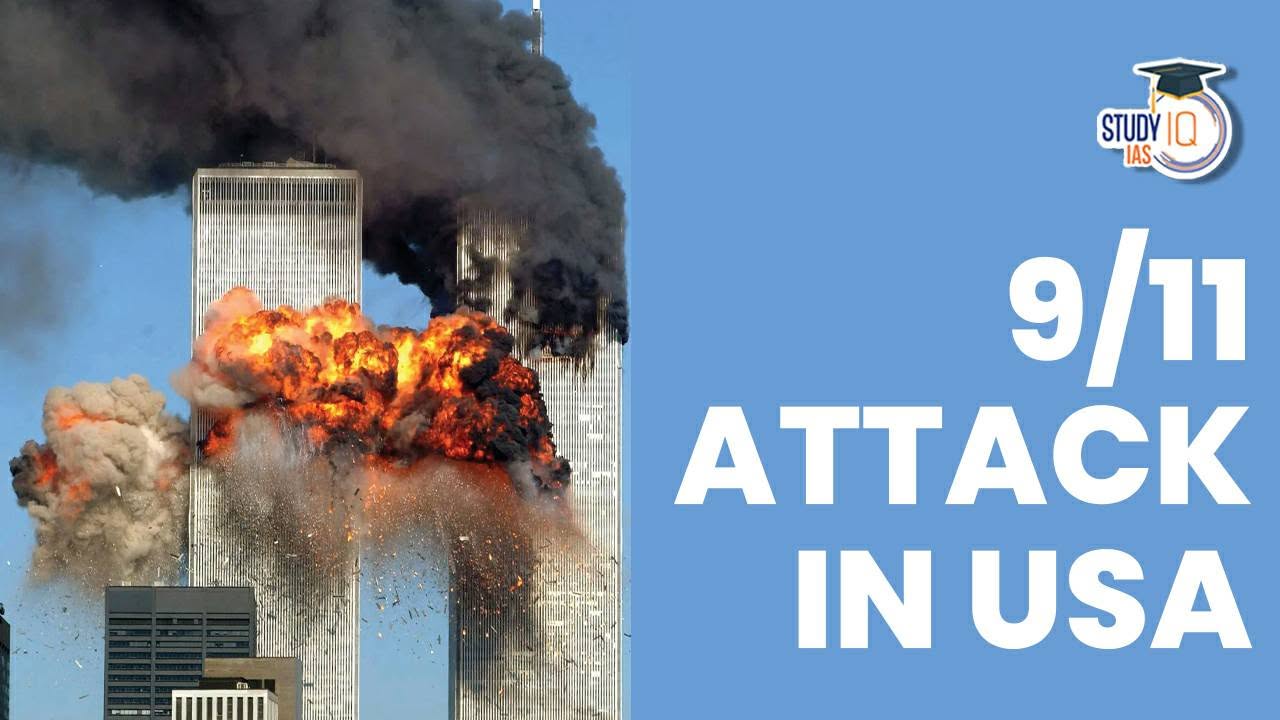
A Note on the 25th Anniversary: Twenty-five years ago, on a clear September morning, the United States suffered the deadliest terrorist attack in its history. Nearly three thousand people were murdered in New York, at the Pentagon, and in a Pennsylvania field. The wounds remain. Families still grieve. First responders and survivors continue to face the long-term effects of that day. As the nation marks a quarter-century since September 11, 2001, the facts of what happened must be remembered without embellishment or distortion. On the morning of Tuesday, September 11, 2001, 19 men affiliated with the Islamist terrorist organization al-Qaeda hijacked four commercial airliners in a coordinated suicide attack against the United States. The planes were turned into weapons. Two struck the Twin Towers of the World Trade Center in New York City. One struck the Pentagon in Arlington, Virginia, and the fourth crashed into a field near Shanksville, Pennsylvania, after passengers and crew fought back. Nearly 3,000 people were killed. The attacks remain the deadliest terrorist incident in history and the deadliest foreign attack on American soil.The official investigation by the National Commission on Terrorist Attacks Upon the United States (the 9/11 Commission) established that the plot was directed by al-Qaeda leader Osama bin Laden and operationally planned primarily by Khalid Sheikh Mohammed. Bin Laden later claimed responsibility in a 2004 video statement. The 19 hijackers were trained by al-Qaeda; 15 were Saudi nationals, two were from the United Arab Emirates, one was Egyptian (Mohamed Atta, the operational leader of the Hamburg cell that included several of the pilots), and one was Lebanese. Background and Planning: Al-Qaeda, founded by bin Laden in the late 1980s, had already attacked American targets, including the 1998 U.S. embassy bombings in Kenya and Tanzania and the 2000 attack on the USS Cole. Bin Laden had issued public calls for violence against Americans. The 9/11 plot involved selecting long-haul West Coast flights that would be fully fueled. The hijackers trained as pilots in the United States and entered the country legally on visas. Intelligence agencies had received warnings of impending attacks in the summer of 2001 (“the system was blinking red”), but information was not adequately shared or acted upon across agencies. The Commission later identified failures of imagination, policy, capabilities, and management. Airport security at the time allowed small knives (box cutters were the primary weapons used). Several hijackers were selected for additional screening but were allowed to board. Timeline of the Attacks (All Times Eastern Daylight Time) The four aircraft were: American Airlines Flight 11 (Boeing 767, Boston to Los Angeles): 11 crew, 76 passengers + 5 hijackers. Departed 7:59 a.m. United Airlines Flight 175 (Boeing 767, Boston to Los Angeles): 9 crew, 51 passengers + 5 hijackers. Departed 8:14 a.m. American Airlines Flight 77 (Boeing 757, Washington Dulles to Los Angeles): 6 crew, 53 passengers + 5 hijackers. Departed 8:20 a.m. United Airlines Flight 93 (Boeing 757, Newark to San Francisco): 7 crew, 33 passengers + 4 hijackers. Departed 8:42 a.m. (delayed). Early morning movements: Mohamed Atta and Abdul Aziz al-Omari cleared security in Portland, Maine, around 5:45 a.m. and flew to Boston to board Flight 11. Other hijackers boarded at Boston Logan, Dulles, and Newark. Hijackings Begin: Around 8:14 a.m., Flight 11 was hijacked. Flight attendants Betty Ong and Madeline “Amy” Sweeney used airphones to report the takeover. Ong described the situation: "The cockpit was inaccessible, passengers and crew had been stabbed, and the hijackers were in control." Controllers lost normal contact. At approximately 8:24 a.m, Atta (piloting) mistakenly transmitted over the air traffic control frequency instead of the cabin PA: “We have some planes. Just stay quiet, and you’ll be okay. We are returning to the airport.” A later transmission from the Hijackers, and their last one before the impact, reads: “Nobody move. Everything will be OK. If you try to make any moves, you’ll endanger yourself and the airplane. Just stay quiet.” Flight 175 was hijacked around 8:42–8:46 a.m. Controllers and other pilots heard suspicious transmissions. Flight 77 was hijacked after 8:51 a.m. and its transponder was turned off. Flight 93 was hijacked around 9:28 a.m. Its pilot and first officer made “Mayday” calls and were heard struggling. Impact times: 8:46:40 a.m. — Flight 11 struck the North Tower (1 World Trade Center) between floors 93 and 99 at roughly 465 mph. All aboard died instantly. Stairwells and elevators were severed; hundreds were trapped above the impact zone. 9:03:11 a.m. — Flight 175 struck the South Tower (2 World Trade Center) between floors 77 and 85 at about 590 mph. The impact was broadcast live. All aboard died; many more were trapped. 9:37 a.m. — Flight 77 struck the west side of the Pentagon, penetrating multiple rings of the building. All aboard and 125 people in the building died. 10:03:11 a.m. — Flight 93 crashed in a field in Stonycreek Township, Somerset County, Pennsylvania, after passengers and crew stormed the cockpit. The 9/11 Commission concluded the intended target was likely the U.S. Capitol or the White House. President George W. Bush was informed while reading to school children in Florida. Chief of Staff Andrew Card whispered to him at about 9:05 a.m, “A second plane hit the second tower. America is under attack.” Collapses: The South Tower collapsed at 9:59 a.m. after burning for 56 minutes. The North Tower collapsed at 10:28 a.m. Debris and fires destroyed or damaged surrounding buildings. Part of the Pentagon collapsed later that morning. Flight 93 cockpit voice recorder and passenger revolt: The recorder captured the final ~30 minutes. Hijacker-pilot Ziad Jarrah announced to passengers (transmitted to controllers): “Ladies and gentlemen: Here the captain. Please sit down, keep remaining seating. We have a bomb on board. So sit.” Later, as the issue intesifies on board, and as the Hijackers diverts to crash potientally into the White House Building not too far away, their last communication to the passengers reads: “We have a bomb aboard, and we are going back to the airport, and we have our demands. So please remain quiet.” Passengers and crew, learning via phone calls of the other attacks, voted to act. Todd Beamer’s final words to a ground operator included: “Are you guys ready? Okay. Let’s roll.” Sounds of struggle, crashing, and passengers forcing their way toward the cockpit were audible. Hijackers shouted in Arabic. One said “Pull it down!” as the plane inverted and crashed. All 44 people aboard died. Airspace was shut down. Military fighters were scrambled, but none intercepted the hijacked planes before impact. Casualties: Official count: 2,977 victims (excluding the 19 hijackers). Breakdown: World Trade Center and surrounding area: 2,753 (including 343 New York City firefighters, 23 NYPD officers, 37 Port Authority officers). Pentagon: 184 (125 in the building + 59 aboard Flight 77). Flight 93: 40 passengers and crew. All 246 people aboard the four aircraft (excluding hijackers) died. Victims included citizens of more than 70 countries. The youngest was 2 years old; the oldest was in their 80s. Thousands more were injured. Long-term health effects from toxic dust at Ground Zero have caused additional deaths and illnesses among responders and survivors. Immediate Aftermath and Investigation Rescue and recovery at the World Trade Center site (Ground Zero) continued for months. The FBI’s investigation rapidly linked the hijackers to al-Qaeda. Bin Laden was identified as the primary suspect within hours. The 9/11 Commission (bipartisan, created in 2002) reviewed millions of pages of documents and interviewed more than 1,200 people. Its July 2004 report provided the definitive public account, detailed the plot, and criticized intelligence and aviation security failures. It found no evidence that the Saudi government as an institution funded the specific attacks, though 15 hijackers were Saudi. Key recommendations included better intelligence coordination (leading to the Director of National Intelligence and National Counterterrorism Center), improved aviation security, and a global strategy against Islamist terrorism. Longer-Term Consequences Military response: On October 7, 2001, the United States and coalition partners launched Operation Enduring Freedom in Afghanistan to dismantle al-Qaeda and remove the Taliban regime that had sheltered it. The Taliban fell quickly, but the war continued for nearly 20 years until the U.S. withdrawal in 2021, after which the Taliban regained control. In 2003 the United States invaded Iraq, citing (among other reasons) alleged links to terrorism and weapons of mass destruction that were not substantiated as claimed. The war and occupation lasted years and contributed to regional instability and the rise of groups such as ISIS. Bin Laden was killed by U.S. Navy SEALs in a raid on his compound in Abbottabad, Pakistan, on May 2, 2011. Domestic security and law: The USA PATRIOT Act (October 2001) expanded surveillance and investigative powers. The Department of Homeland Security was created. The Transportation Security Administration (TSA) federalized airport screening. Cockpit doors were hardened, no-fly lists expanded, and passenger screening intensified. Continuity-of-government measures were activated for the first time on 9/11. Human and economic cost: Direct and long-term costs of the post-9/11 wars have been estimated in the trillions of dollars. Thousands of American service members were killed or wounded; far higher numbers of Afghan, Iraqi, and other civilians died. The attacks unified the country temporarily, produced lasting changes in security culture, and reshaped American foreign policy for a generation. The 9/11 Commission Report remains the primary authoritative source for the sequence of events, the hijackers’ actions, intelligence failures, and the emergency response. Official timelines, air traffic control recordings, flight data recorders, cockpit voice recorders (especially Flight 93), passenger phone calls, and survivor and responder accounts corroborate the public record. The attacks demonstrated both the vulnerability of open societies and the capacity for ordinary people—flight attendants reporting hijackings, passengers on Flight 93 fighting back, first responders rushing into collapsing buildings—to confront extreme violence with courage.