SpaceXAI, the artificial intelligence division of SpaceX, on Tuesday introduced Grok Bot in early beta, describing the product as a team of always-on AI agents that can sign into users’ existing tools and apps, complete multi-step tasks independently, and return finished work.
“Bots are AI teammates that do real work for you. They sign in to your tools, use them just like you do, and come back with finished work,” the company account @SpaceXAI posted on X alongside a demonstration video. Users can assign tasks via messaging on desktop or iOS, step away, and check in later; the agents operate on their own cloud-based computers and only ping for approvals when needed.
SpaceXAI said Grok Bot began as an internal prototype that “took off across the company.” Teams used it for sales outbound, marketing campaigns, office operations, bug fixes, CRM updates, invoice processing, and other workflows. Multiple bots can run in parallel, share context, message one another, and coordinate in group chats, with one bot able to manage others.
The product is available now in early beta to SuperGrok Heavy, Cursor Ultra, and Cursor Teams Premium subscribers. Enterprise users can join a waitlist. Elon Musk said the company will widen access after addressing basic issues in the early beta and releasing Grok 4.6 later this week.
Grok Bot arrives as SpaceXAI pushes deeper into agentic AI systems that perform end-to-end work rather than just generating responses. The company, formed after SpaceX acquired xAI earlier in 2026, has been expanding its AI offerings, including the recent Grok 4.5 model and its pending $60 billion acquisition of the coding startup Cursor. Officials have positioned the new agents against competing tools from Microsoft and Google.
In a company blog post, SpaceXAI noted that bots can work across apps and websites even without clean APIs, learning user preferences over time and handling jobs such as negotiating with vendors in a user’s voice, managing online store support, or keeping systems updated overnight. The launch coincides with broader company efforts to scale AI revenue and infrastructure.
Early users and observers have begun testing specialized bots for roles ranging from content creation and research to operations and engineering support. SpaceXAI emphasized that the system is still in early beta and continues to be refined.
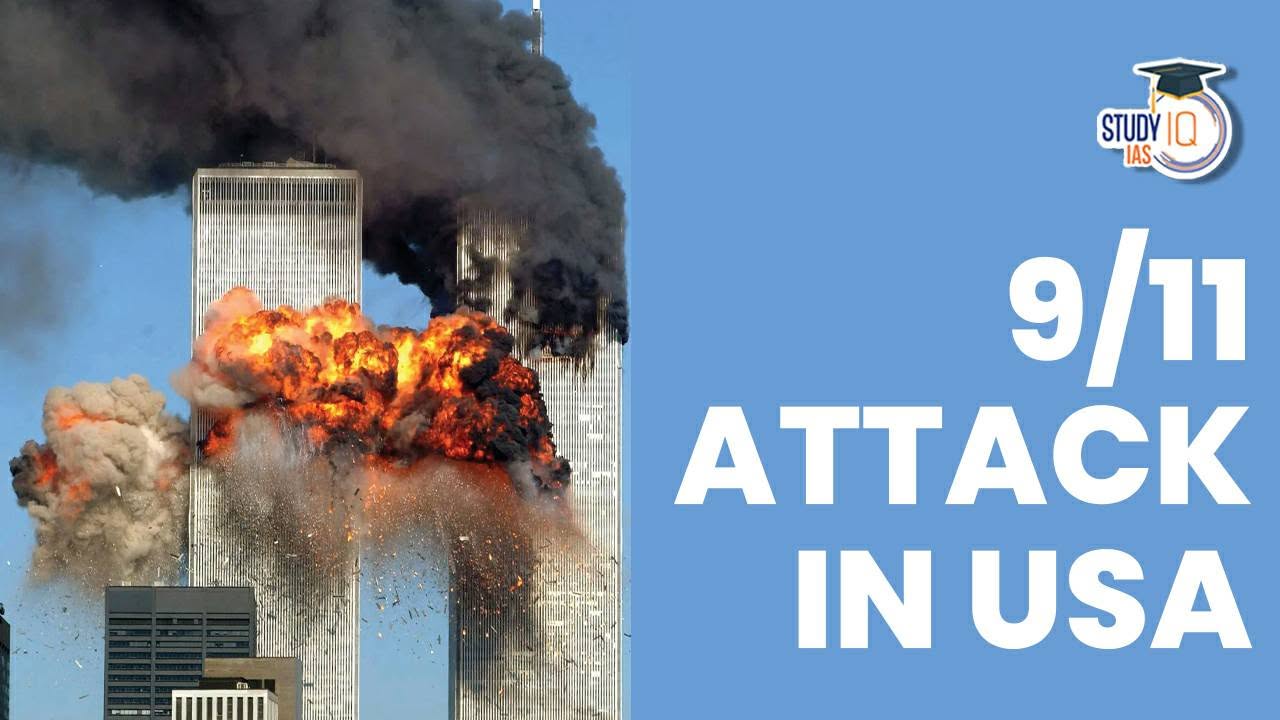
A Note on the 25th Anniversary: Twenty-five years ago, on a clear September morning, the United States suffered the deadliest terrorist attack in its history. Nearly three thousand people were murdered in New York, at the Pentagon, and in a Pennsylvania field. The wounds remain. Families still grieve. First responders and survivors continue to face the long-term effects of that day. As the nation marks a quarter-century since September 11, 2001, the facts of what happened must be remembered without embellishment or distortion. On the morning of Tuesday, September 11, 2001, 19 men affiliated with the Islamist terrorist organization al-Qaeda hijacked four commercial airliners in a coordinated suicide attack against the United States. The planes were turned into weapons. Two struck the Twin Towers of the World Trade Center in New York City. One struck the Pentagon in Arlington, Virginia, and the fourth crashed into a field near Shanksville, Pennsylvania, after passengers and crew fought back. Nearly 3,000 people were killed. The attacks remain the deadliest terrorist incident in history and the deadliest foreign attack on American soil.The official investigation by the National Commission on Terrorist Attacks Upon the United States (the 9/11 Commission) established that the plot was directed by al-Qaeda leader Osama bin Laden and operationally planned primarily by Khalid Sheikh Mohammed. Bin Laden later claimed responsibility in a 2004 video statement. The 19 hijackers were trained by al-Qaeda; 15 were Saudi nationals, two were from the United Arab Emirates, one was Egyptian (Mohamed Atta, the operational leader of the Hamburg cell that included several of the pilots), and one was Lebanese. Background and Planning: Al-Qaeda, founded by bin Laden in the late 1980s, had already attacked American targets, including the 1998 U.S. embassy bombings in Kenya and Tanzania and the 2000 attack on the USS Cole. Bin Laden had issued public calls for violence against Americans. The 9/11 plot involved selecting long-haul West Coast flights that would be fully fueled. The hijackers trained as pilots in the United States and entered the country legally on visas. Intelligence agencies had received warnings of impending attacks in the summer of 2001 (“the system was blinking red”), but information was not adequately shared or acted upon across agencies. The Commission later identified failures of imagination, policy, capabilities, and management. Airport security at the time allowed small knives (box cutters were the primary weapons used). Several hijackers were selected for additional screening but were allowed to board. Timeline of the Attacks (All Times Eastern Daylight Time) The four aircraft were: American Airlines Flight 11 (Boeing 767, Boston to Los Angeles): 11 crew, 76 passengers + 5 hijackers. Departed 7:59 a.m. United Airlines Flight 175 (Boeing 767, Boston to Los Angeles): 9 crew, 51 passengers + 5 hijackers. Departed 8:14 a.m. American Airlines Flight 77 (Boeing 757, Washington Dulles to Los Angeles): 6 crew, 53 passengers + 5 hijackers. Departed 8:20 a.m. United Airlines Flight 93 (Boeing 757, Newark to San Francisco): 7 crew, 33 passengers + 4 hijackers. Departed 8:42 a.m. (delayed). Early morning movements: Mohamed Atta and Abdul Aziz al-Omari cleared security in Portland, Maine, around 5:45 a.m. and flew to Boston to board Flight 11. Other hijackers boarded at Boston Logan, Dulles, and Newark. Hijackings Begin: Around 8:14 a.m., Flight 11 was hijacked. Flight attendants Betty Ong and Madeline “Amy” Sweeney used airphones to report the takeover. Ong described the situation: "The cockpit was inaccessible, passengers and crew had been stabbed, and the hijackers were in control." Controllers lost normal contact. At approximately 8:24 a.m, Atta (piloting) mistakenly transmitted over the air traffic control frequency instead of the cabin PA: “We have some planes. Just stay quiet, and you’ll be okay. We are returning to the airport.” A later transmission from the Hijackers, and their last one before the impact, reads: “Nobody move. Everything will be OK. If you try to make any moves, you’ll endanger yourself and the airplane. Just stay quiet.” Flight 175 was hijacked around 8:42–8:46 a.m. Controllers and other pilots heard suspicious transmissions. Flight 77 was hijacked after 8:51 a.m. and its transponder was turned off. Flight 93 was hijacked around 9:28 a.m. Its pilot and first officer made “Mayday” calls and were heard struggling. Impact times: 8:46:40 a.m. — Flight 11 struck the North Tower (1 World Trade Center) between floors 93 and 99 at roughly 465 mph. All aboard died instantly. Stairwells and elevators were severed; hundreds were trapped above the impact zone. 9:03:11 a.m. — Flight 175 struck the South Tower (2 World Trade Center) between floors 77 and 85 at about 590 mph. The impact was broadcast live. All aboard died; many more were trapped. 9:37 a.m. — Flight 77 struck the west side of the Pentagon, penetrating multiple rings of the building. All aboard and 125 people in the building died. 10:03:11 a.m. — Flight 93 crashed in a field in Stonycreek Township, Somerset County, Pennsylvania, after passengers and crew stormed the cockpit. The 9/11 Commission concluded the intended target was likely the U.S. Capitol or the White House. President George W. Bush was informed while reading to school children in Florida. Chief of Staff Andrew Card whispered to him at about 9:05 a.m, “A second plane hit the second tower. America is under attack.” Collapses: The South Tower collapsed at 9:59 a.m. after burning for 56 minutes. The North Tower collapsed at 10:28 a.m. Debris and fires destroyed or damaged surrounding buildings. Part of the Pentagon collapsed later that morning. Flight 93 cockpit voice recorder and passenger revolt: The recorder captured the final ~30 minutes. Hijacker-pilot Ziad Jarrah announced to passengers (transmitted to controllers): “Ladies and gentlemen: Here the captain. Please sit down, keep remaining seating. We have a bomb on board. So sit.” Later, as the issue intesifies on board, and as the Hijackers diverts to crash potientally into the White House Building not too far away, their last communication to the passengers reads: “We have a bomb aboard, and we are going back to the airport, and we have our demands. So please remain quiet.” Passengers and crew, learning via phone calls of the other attacks, voted to act. Todd Beamer’s final words to a ground operator included: “Are you guys ready? Okay. Let’s roll.” Sounds of struggle, crashing, and passengers forcing their way toward the cockpit were audible. Hijackers shouted in Arabic. One said “Pull it down!” as the plane inverted and crashed. All 44 people aboard died. Airspace was shut down. Military fighters were scrambled, but none intercepted the hijacked planes before impact. Casualties: Official count: 2,977 victims (excluding the 19 hijackers). Breakdown: World Trade Center and surrounding area: 2,753 (including 343 New York City firefighters, 23 NYPD officers, 37 Port Authority officers). Pentagon: 184 (125 in the building + 59 aboard Flight 77). Flight 93: 40 passengers and crew. All 246 people aboard the four aircraft (excluding hijackers) died. Victims included citizens of more than 70 countries. The youngest was 2 years old; the oldest was in their 80s. Thousands more were injured. Long-term health effects from toxic dust at Ground Zero have caused additional deaths and illnesses among responders and survivors. Immediate Aftermath and Investigation Rescue and recovery at the World Trade Center site (Ground Zero) continued for months. The FBI’s investigation rapidly linked the hijackers to al-Qaeda. Bin Laden was identified as the primary suspect within hours. The 9/11 Commission (bipartisan, created in 2002) reviewed millions of pages of documents and interviewed more than 1,200 people. Its July 2004 report provided the definitive public account, detailed the plot, and criticized intelligence and aviation security failures. It found no evidence that the Saudi government as an institution funded the specific attacks, though 15 hijackers were Saudi. Key recommendations included better intelligence coordination (leading to the Director of National Intelligence and National Counterterrorism Center), improved aviation security, and a global strategy against Islamist terrorism. Longer-Term Consequences Military response: On October 7, 2001, the United States and coalition partners launched Operation Enduring Freedom in Afghanistan to dismantle al-Qaeda and remove the Taliban regime that had sheltered it. The Taliban fell quickly, but the war continued for nearly 20 years until the U.S. withdrawal in 2021, after which the Taliban regained control. In 2003 the United States invaded Iraq, citing (among other reasons) alleged links to terrorism and weapons of mass destruction that were not substantiated as claimed. The war and occupation lasted years and contributed to regional instability and the rise of groups such as ISIS. Bin Laden was killed by U.S. Navy SEALs in a raid on his compound in Abbottabad, Pakistan, on May 2, 2011. Domestic security and law: The USA PATRIOT Act (October 2001) expanded surveillance and investigative powers. The Department of Homeland Security was created. The Transportation Security Administration (TSA) federalized airport screening. Cockpit doors were hardened, no-fly lists expanded, and passenger screening intensified. Continuity-of-government measures were activated for the first time on 9/11. Human and economic cost: Direct and long-term costs of the post-9/11 wars have been estimated in the trillions of dollars. Thousands of American service members were killed or wounded; far higher numbers of Afghan, Iraqi, and other civilians died. The attacks unified the country temporarily, produced lasting changes in security culture, and reshaped American foreign policy for a generation. The 9/11 Commission Report remains the primary authoritative source for the sequence of events, the hijackers’ actions, intelligence failures, and the emergency response. Official timelines, air traffic control recordings, flight data recorders, cockpit voice recorders (especially Flight 93), passenger phone calls, and survivor and responder accounts corroborate the public record. The attacks demonstrated both the vulnerability of open societies and the capacity for ordinary people—flight attendants reporting hijackings, passengers on Flight 93 fighting back, first responders rushing into collapsing buildings—to confront extreme violence with courage.